
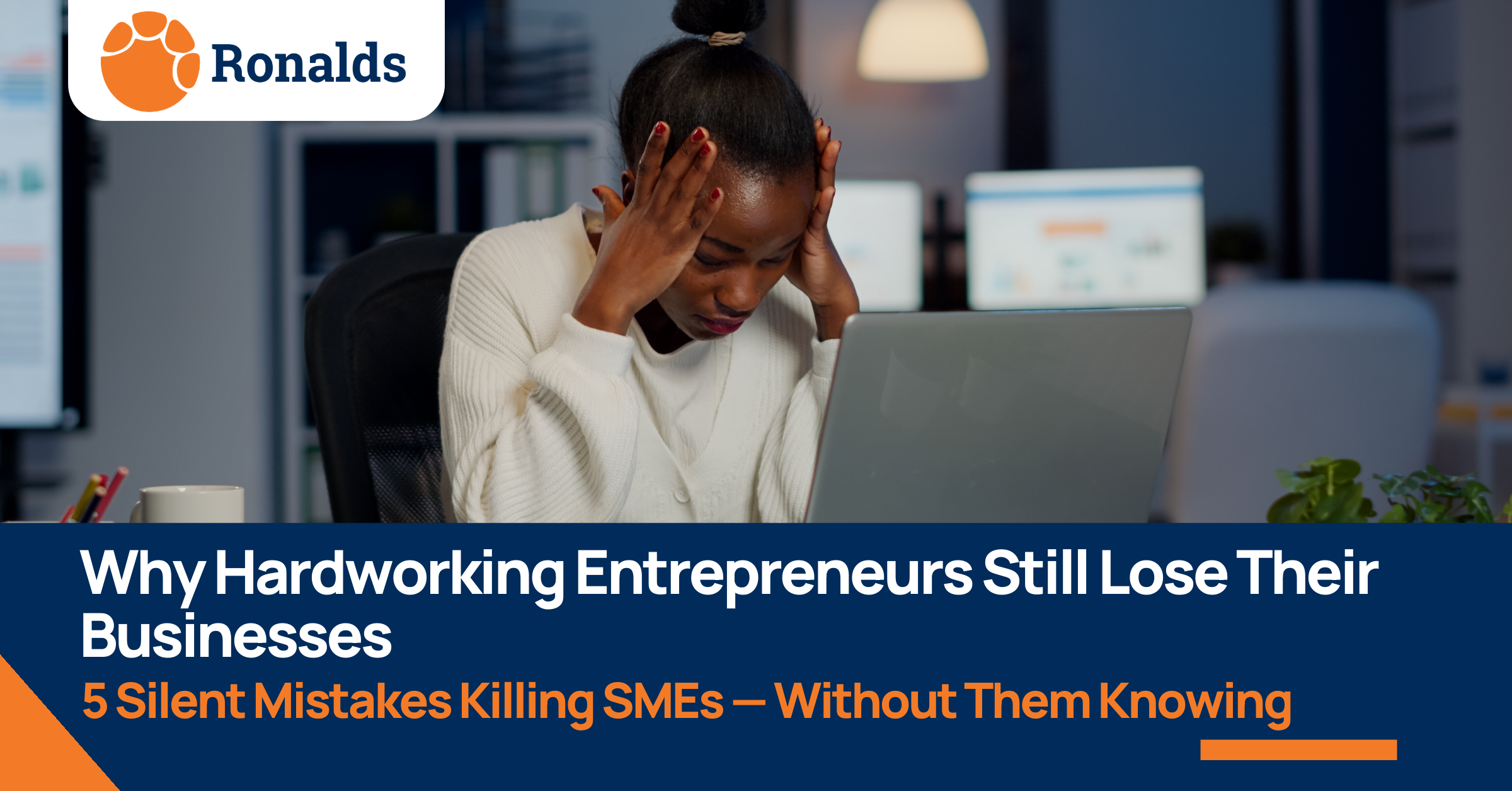
Why SMEs Fail: Many entrepreneurs work extremely hard, yet their businesses still collapse. This leads to a painful question: Why do SMEs fail despite effort, commitment, and long working hours?
Across Africa and emerging markets, Small and Medium Enterprises (SMEs) play a critical role in economic development. However, statistics show that over 60% of SMEs fail within the first five years.
Contrary to popular belief, SMEs do not fail mainly because of lack of money. They fail due to silent business mistakes that slowly weaken operations until collapse becomes inevitable.
In this article, we explore why SMEs fail and uncover the five silent reasons hardworking entrepreneurs lose their businesses — and how to avoid them.
Why SMEs Fail Despite Hard Work
Most business owners are not lazy. They invest:
- Long working hours
- Personal savings
- Emotional energy
- Family sacrifices
Yet businesses still shut down quietly.
So, why do SMEs fail?
The root causes are rarely visible. They include:
- Lack of strategic vision
- Weak systems
- Poor management
- Operational inefficiencies
- Vulnerability to economic and regulatory shocks
Let’s explore the five silent reasons SMEs fail.
1. Lack of Clear Vision and Strategic Direction
One of the leading reasons why SMEs fail is the absence of a clear business vision.
Many entrepreneurs start businesses by copying others. They see a friend succeed, observe a neighbor making profits, or notice a trending business idea — then jump in without proper planning.
Why This Causes SME Failure
Without a clear vision:
- Business decisions become reactive
- Motivation fades during challenges
- Long-term planning disappears
- Direction becomes unclear
When difficulties arise, entrepreneurs quickly lose focus because there was never a strong purpose guiding the business.
A business without vision is like a ship without a compass — it drifts until it crashes.
How to Avoid This
To prevent failure, SMEs must define:
- Clear business purpose
- Target customers
- Real problems they are solving
- Long-term strategic goals
Strong vision provides clarity, discipline, and resilience, especially during difficult seasons.
2. Lack of Consistency and Persistence
Another major reason why SMEs fail is quitting too early.
Many entrepreneurs expect:
- Instant profits
- Rapid growth
- Viral sales
- Quick financial returns
When these expectations fail, discouragement sets in.
Why This Leads to Business Failure
Business growth is slow. The early stages demand:
- Patience
- Faith
- Discipline
- Mental resilience
Most SMEs collapse just a few steps before profitability because owners lose consistency.
Business is a slow cooker, not a microwave.
Winning Strategy
Consistency builds:
- Customer trust
- Market presence
- Brand authority
- Operational stability
Entrepreneurs who stay persistent eventually outperform those who quit early.
3. Lack of Structure and Business Systems
Poor systems remain a key contributor to why SMEs fail.
Many small businesses depend entirely on the owner. There are:
- No systems
- No documentation
- No clear procedures
- No financial structures
This creates chaos.
Common Structural Weaknesses in SMEs
- Weak accounting systems
- No operational workflows
- Poor inventory controls
- No performance measurement
- Weak compliance management
Without structure, businesses cannot scale, delegate, or stabilize.
Why Systems Matter
Strong systems allow:
- Predictable operations
- Efficient delegation
- Reduced dependency on owners
- Sustainable business growth
Don’t just hustle — organize your hustle.
4. Weak Management and Operations
Weak leadership and operational inefficiencies explain a large portion of why SMEs fail.
Common Management Mistakes
- Poor leadership decisions
- Inexperienced management teams
- Costly hiring mistakes
- Weak marketing strategies
- Poor financial controls
These issues reduce profitability, increase waste, and weaken customer trust.
Why Strong Management Prevents SME Failure
Good management:
- Improves efficiency
- Controls operational costs
- Enhances customer satisfaction
- Supports sustainable expansion
Without strong leadership, even profitable businesses eventually collapse.
5. Vulnerability to External Factors
External shocks significantly contribute to why SMEs fail, especially in emerging markets.
Major External Threats Facing SMEs
Economic Instability
Inflation, recessions, and reduced consumer spending directly affect SME revenues.
Tax and Regulatory Compliance Challenges
Poor tax planning and compliance expose SMEs to:
- Penalties
- Audits
- Legal sanctions
- Cash flow disruption
Technological Shifts
Failure to adopt:
- Digital accounting tools
- E-commerce
- Online marketing
- Automation
makes businesses less competitive.
Post-Covid Economic Effects
Many SMEs never recovered after Covid-19 due to weak financial structures and lack of crisis preparedness.
Why SMEs Fail: It’s Not About Capital Alone
Many entrepreneurs believe lack of capital is the main reason why SMEs fail.
In reality, capital without strategy, structure, and systems only delays failure.
Businesses collapse not because money is unavailable, but because:
- Financial planning is weak
- Systems are poor
- Management is ineffective
- Compliance is ignored
True sustainability comes from strong leadership, clear strategy, and solid operational foundations.
How SMEs Can Prevent Business Failure
To avoid collapse, SMEs must invest in:
- Strategic business planning
- Financial management systems
- Tax compliance & advisory
- Operational efficiency
- Corporate governance
- Digital transformation
These pillars build business resilience and long-term profitability.
How Ronalds Uganda Helps SMEs Succeed
At Ronalds Uganda, we provide professional services designed to reduce business failure and drive sustainable growth.
Our Core Services
✔ Audit & Assurance
✔ Tax Advisory & Compliance
✔ Regulatory Compliance
✔ Business Advisory
✔ Financial Management Consulting
We help entrepreneurs:
- Build strong business systems
- Achieve regulatory compliance
- Improve financial discipline
- Develop scalable growth strategies
Final Thoughts: Why SMEs Fail — And How You Can Succeed
Hard work alone does not guarantee success.
Businesses succeed through:
Vision • Strategy • Systems • Discipline • Structure • Compliance
Understanding why SMEs fail empowers entrepreneurs to avoid costly mistakes and build resilient, profitable enterprises.
Written By Godfrey Mpaulo
